

Welcome to Ladakh
Ladakh translates to ‘The Land of Mountains and High Passes’. It is a high-altitude desert in the northern most part of India. Its altitude ranges from 2,500-7,500 m above sea level. Despite its harsh climate, Ladakh has a unique and diverse livelihood system that includes pastoralism and agriculture. The people here largely follow Tibetan Buddhism, and its influence can be seen in the archetype of cultural monuments, which include monasteries and stupas throughout the region. Ladakh is rich in biodiversity and is a popular wildlife destination for snow leopard sighting. It is also home to a variety of bird species, many of which are migratory. Some of these birds include bar-headed goose and black necked crane. The conservation of Ladakh’s natural resources and wildlife is crucial for the long-term sustainability of the region’s livelihood.


Himalayan Homestays
A Brief History
The Snow Leopard Conservancy India Trust (SLC-IT) is a not-for-profit organization run by a group of enthusiastic Ladakhi youth working at the grass-roots level. The organization was co-founded in 2003 by late Rinchen Wangchuk, a Ladakhi mountaineer and naturalist. SLC-IT had realized early on that snow leopards and other wild animals cannot be conserved without the support of local communities that bear the brunt of human-wildlife conflict. The Himalayan Homestays Program was pioneered to incentivize people’s involvement in snow leopard conservation and serves as one of the best wildlife conservation models in the world.
Awards and Honours


The Snow Leopard Conservancy India Trust won several awards and accolades both nationally and internationally

2004
First Choice Responsible Tourism Award at the World Travel Market
2013
Favorite Responsible Tourism Initiative Award by Outlook Traveller
2005
Global Vision Award for Community Outreach and Responsible Tourism
2017
Indian Responsible Tourism Award (Gold Winner)
2008
Finalists in the Geotourism Challenge by National Geographic's Centre for Sustainable Destinations and Ashoka Changemakers
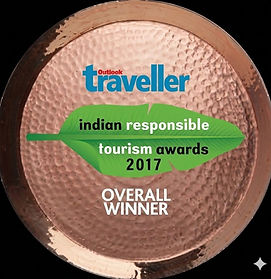
2017
Indian Responsible Tourism Award (Overall Winner)
2018
ToFTigers Wildlife Tourism Award by ToFTigers: Sustainable Tourism and Wildlife Conservation
2018
Carl Zeiss Wildlife Conservation Award
2025
Junoon Awards


REMEMBERING RINCHEN WANGCHUK
Rinchen Wangchuk is fondly remembered by his family, friends and colleagues in the snow leopard network. Rinchen was born on the 11th August, 1969 in Dehradun. He was a mountaineer and a naturalist par excellence. He conquered Stok Kangri, one of the highest peaks in Ladakh, multiple times. After studying in different parts of northern India, he returned to his homeland, Ladakh. He worked for the Snow Leopard Trust for several years as a Field Associate before co-founding the Snow Leopard Conservancy India Trust with Dr Rodney Jackson. He was a spirited soul and a great visionary. Rinchen breathed his last on the 25th March, 2011 in Ladakh, leaving behind an enduring legacy.
Rinchen’s vision to create a more inclusive conservation framework through involving local communities was revolutionary. He strived to support impoverished local communities who suffered heavily due to livestock losses to predators, especially snow leopards. After numerous discussions and consultations with local community members, he initiated the Himalayan Homestay Program in Ladakh in 2002. This award-winning program, brought along pioneering conservation measures in Ladakh that have only grown from strength to strength. The Himalayan Homestay Program has won several national and international awards.
He travelled to some of the remotest places of Ladakh to understand conservation issues and generously sponsored the education of under-privilege children. Through all the conservation initiatives, he led a team that managed to turn the snow leopard from a despised cat to a source of income for local communities. For all his snow leopard conservation efforts, he was awarded the Freeman Award for Snow Leopard Conservation in 2010, and Award for Outstanding Achievements in Community-Based Snow Leopard Conservation in 2011. The prospects for the snow leopard will continue to improve, thanks to the strong foundations laid by him.





Get to Know
Our hosts are eager to share their stories and culture with you.
Living in some of the remotest and inaccessible parts, people in Ladakh relied on land-based economy for centuries until the influx of military post-1962 and of tourists after 1974, when Ladakh was first opened to tourism. With limited livelihood options, it was difficult for people to cope with livestock losses to wild predators such as snow leopard and crop losses to wild ungulates such as Ladakh urial. SLC-IT started exploring ways to mitigate these conflicts, which gave birth to the idea of homestays from the local communities in early 2000s. The Himalayan Homestays is the first conservation-linked tourism program in the Himalayas, instrumental in changing people's attitude towards the snow leopard, which is now considered worth more alive than dead. People in the past killed this elegant cat in retaliation for livestock depredation, but today the Himalayan Homestays foster human-snow leopard coexistence in Ladakh.The program is based on the principles of local control, small scale and slow growth. From the beginning, emphasis has been on maintaining traditional Ladakhi values and ethos, particularly by serving rich and authentic Ladakhi food, beverages, rooms and décor. Further, what you pay goes directly to the local communities and stays within the local economy. 10% of the proceeds goes to a village conservation fund geared towards managing and conserving the local environment, wildlife and cultural sites in the village.
